Online Chess Lessons, Tutors & Tournaments Near You: The Complete Guide for Parents

Updated: Aug 21
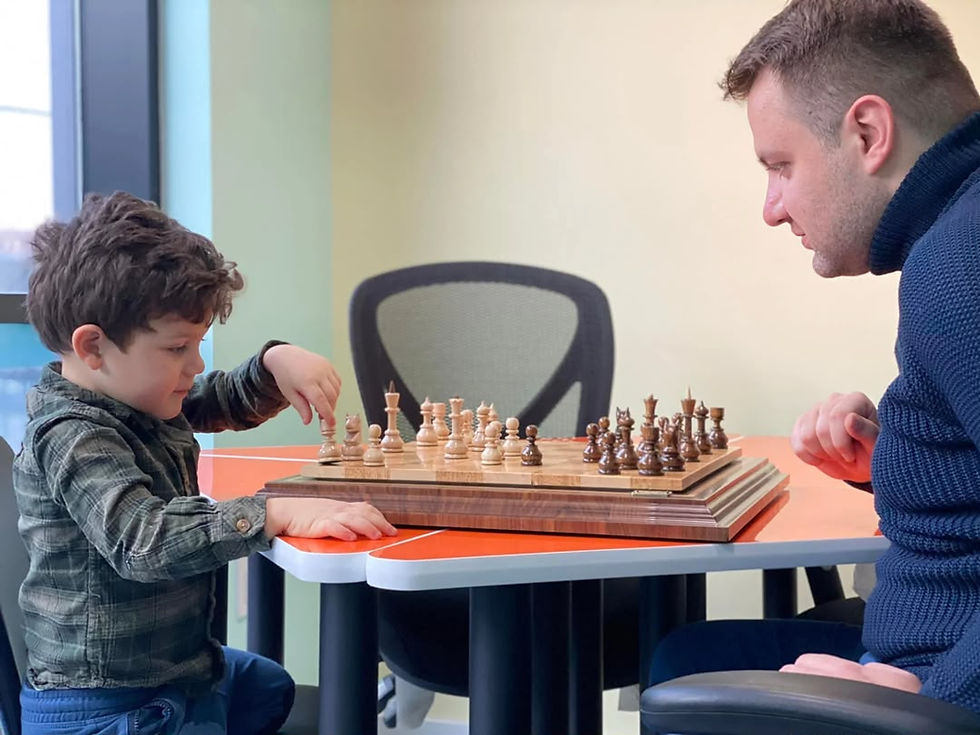
Every parent knows the feeling — you watch your child sit across a chessboard, eyes narrowing with focus, and something clicks. Chess isn't just a game. It builds patience, sharpens logic, and teaches kids how to think two, three, ten moves ahead. The only question is: how do you find a teacher truly worthy of that potential?
Whether you're searching for online chess lessons, an online chess tutor who can meet your child exactly where they are, or chess tournaments near me to put those skills to the test — this guide covers everything you need to know. We'll walk through how modern online coaching works, what to look for in a great tutor, and how to find competitive opportunities that keep kids motivated and growing.

Why Online Chess Lessons Are the Smarter Choice in 2026
A decade ago, if you wanted serious chess instruction, you needed to live near a rated club or a university chess program. Geography decided your child's ceiling. That world is gone. Today, online chess lessons have not only matched the quality of in-person coaching — in many ways, they've surpassed it.
The most obvious advantage is access. When lessons happen over video and a shared digital board, your child can learn from a Grandmaster in Spain or a FIDE Master in Ukraine without leaving the living room. The best teachers in the world are no longer out of reach. And for busy families, there's no commute, no rescheduling headache when the weather turns, and no minimum commitment to a physical club's calendar.
But the real advantage is depth. On platforms like Lichess — which MM Chess uses for intermediate and advanced students — a coach can annotate moves in real time, set up custom puzzles on the fly, review game history together, and send homework studies before the next session. The interactive layer of online teaching is genuinely richer than watching someone move pieces across a table. Students also benefit from stronger decision-making skills developed through structured training, as discussed in How to Build Calculation Discipline from Scratch.
For beginners and younger kids, purpose-built platforms provide a gentler on-ramp. Animations, visual cues, and age-appropriate pacing make the first steps feel like play rather than study. A good online chess tutor knows which environment suits which student — and switches fluidly between them as the student grows.
"Back in 2020, when the world went online, I had the idea to look for top-notch players from around the world who had coaching experience and what we call 'winner attitude'." — Misha Vilenchuk, Founder of MM Chess Academy, 3-time National Junior Champion
What to Look for in an Online Chess Tutor
Not every strong chess player is a great teacher, and not every chess teacher has the credentials to take a student beyond the basics. When evaluating an online chess tutor, here's what actually matters:
Verified title from FIDE or a national federation — National Master, FIDE Master, International Master, or Grandmaster. Titles are objective proof of competitive ability.
Experience teaching children specifically — Adult-level coaching requires a fundamentally different communication style than teaching a 7-year-old. Look for coaches who specialize, not generalize.
A structured curriculum — Lessons should build on each other. Ad-hoc "let's just play" sessions are fun but rarely produce measurable improvement. Ask to see a syllabus.
Emotional intelligence and adaptability — A frustrated child will quit. The best tutors notice when to push and when to pull back, adjusting their energy to the student's mood in real time.
Regular homework and progress tracking — Progress between sessions is where most improvement happens. A good tutor assigns puzzles, reviews games, and tracks rating development over time.
Transparent pricing with no surprise fees — Look for academies that publish their rates clearly and don't lock you into auto-renewing contracts.
At MM Chess Academy, every tutor on the roster holds a master-level title and passes through a professional development program before teaching a single student. The team includes a FIDE Master who is also a licensed psychologist, a Grandmaster who was World U14 Champion, and multiple national champions — each bringing a distinct style and specialization to the platform.
How 1-on-1 Online Chess Lessons Actually Work

Many parents picture online learning as a passive experience — a child staring at a screen while a teacher talks. Structured 1-on-1 online chess lessons are nothing like that. Here's what a typical MM Chess session looks like from start to finish.
Before the lesson, the coach reviews the student's recent games, identifies recurring mistakes, and prepares a focused lesson plan. For newer students, this might mean drilling a specific opening principle; for intermediate players, it could mean a deep dive into pawn endgames or tactical patterns from the student's own tournament games.
During the lesson, the student and the coach join a shared virtual board — on Lichess. The coach can draw arrows on the board, set up custom positions, run through variations in real time, and quiz the student with interactive puzzles. The session is conversational, not a lecture.
After the lesson, the coach assigns homework — typically a set of puzzles or a short study tied to that session's topic. Students log into the platform during the week to complete the work. At the next session, the coach reviews how it went and builds the next concept on top of the last.
This systematic approach — one new concept at a time, reinforced by practice between sessions — is the core of the internationally recognized Chess Steps Method that underpins MM Chess's curriculum. The result is steady, measurable progress rather than the plateau that so many self-taught players hit.
How to Find Chess Tournaments Near Me (Online & In-Person)
Learning chess in isolation only goes so far. Competition is the accelerant. When students ask "where are chess tournaments near me?" the answer in 2026 is both closer and broader than it's ever been.
Online tournaments. For younger and less-experienced players, online tournaments are the ideal entry point. They remove the anxiety of traveling to an unfamiliar venue while providing real-rated competition. MM Chess runs free monthly tournaments exclusively for its students — 50+ kids rated 600–1600 competing in a guided, supportive environment, with head coach Misha Vilenchuk present live throughout. These events are included in every active membership.
In-person tournaments near you. For in-person competition, the United States Chess Federation (USCF) maintains a searchable tournament directory at uschess.org. Filtering by your state and age group will surface local scholastic events, weekend open tournaments, and club championships. In Illinois, MM Chess has partnered with the Chicago Chess Center to bring high-quality instruction and tournament opportunities to the area — over 20 Chicago schools currently use MM Chess's curriculum through after-school programs.
What to expect at your first tournament. Most scholastic tournaments use a Swiss-system format — players are paired against opponents of similar scores each round, meaning beginners compete against beginners and never face a 1600-rated opponent in round one. A typical one-day event runs four to five rounds of 30-minute games. Arrive early, bring a clock if you have one, and encourage your child to focus on playing their best game — not on the outcome.
Register your child with USCF for an official rating before their first event. Search uschess.org for rated tournaments by state and age group. Check your local chess club's website — many run unrated "club tournaments" perfect for beginners. Ask your MM Chess coach to help review tournament games afterward. Join MM Chess's monthly online tournaments, free for all active students.

Why MM Chess Academy Is the Best Place to Start
There's no shortage of options when searching for online chess lessons. ChessKid, Chessat3, and private tutors on chess forums all exist. What sets MM Chess apart isn't a single feature — it's the combination of master-level instruction, a proven curriculum, and pricing that makes it genuinely accessible for most families.
Comparable academies charge $70–$90 per hour for the same quality of coaching that MM Chess delivers at $35-40 per hour or less with certain packages. That's not because corners are cut — it's because the model was designed from the ground up to be efficient. By building a network of world-class coaches who teach online from their home countries, MM Chess passes the savings directly to families without compromising on credentials.
The Chess Steps Method curriculum means your child isn't just playing games and hoping for improvement. Every session is a deliberate step in a structured progression, from total beginner to approximately 1200 Elo. Students who complete the full curriculum earn a certificate from Mindful Masters Chess Academy — a milestone that means something in the competitive chess world.
And for families who want to try before committing, a one-hour trial lesson — which doubles as a skill assessment — is available for just $9.99. There's no pressure, no auto-renewal, and class credits never expire. It's designed to be a risk-free first move.
Ready to Make Your First Move?
Book a 1-hour trial lesson with one of our master-titled coaches. Skill assessment included. No commitment required. New students receive $60 off their first full month. Credits never expire. 100% cancelable.
👉 Book a Trial Lesson at mmchess.org — only $9.99
Frequently Asked Questions
1. How much do online chess lessons cost?
At MM Chess Academy, online chess lessons start at just $9.99 for a full one-hour trial lesson, which also includes a skill assessment. After the trial, monthly packages start at $35 per hour — significantly less than the $70–$90 per hour charged by comparable academies. All credits are prepaid and never expire.
2. At what age is it best to start online chess lessons?
We teach students from age 5 all the way through adult learners. The ideal starting age is between 6 and 9, when children are naturally curious and develop pattern recognition quickly. However, it is never too late — many of our students begin at 12, 14, or even as adults and reach competitive levels within a year.
3. How do I find chess tournaments near me?
The easiest way is to visit the Explore page and search by your state and age group. For online tournaments, MM Chess runs free monthly tournaments exclusively for active students — no extra registration needed. In-person options include scholastic events, weekend opens, and local club championships, all searchable through the USCF directory.
4. Do my child's lessons happen live or are they pre-recorded?
All MM Chess lessons are 100% live and 1-on-1. There are no pre-recorded videos or group classes unless you specifically choose a group option. Your child works directly with their assigned master-level coach in real time every session.
5. What platform do you use for online chess lessons?
Beginners and younger students use MM Chess's own beginner-friendly platform. Intermediate and advanced students move to Lichess, where coaches can annotate moves, set puzzles, share studies, and review full game histories together during the lesson.
6. How quickly will my child improve with an online chess tutor?
Most students see noticeable improvement within 4 to 6 weeks of consistent weekly lessons. Students who also complete homework assignments between sessions typically improve twice as fast. Progress depends on the student's starting level, lesson frequency, and practice habits outside of class.
7. Are your coaches qualified to teach children?
Yes. Every MM Chess coach holds a master-level FIDE or national federation title and passes our internal Professional Development Program before teaching their first student. Our roster includes a FIDE Master who is also a licensed psychologist, a World U14 Champion, and multiple national junior champions.
8. Can I choose my child's coach?
Absolutely. You can browse coach profiles on our website, including their titles, teaching style, specializations, and student reviews. If the fit isn't right after the trial, we'll match you with a different coach at no extra cost.
9. What is the Chess Steps Method?
The Chess Steps Method is an internationally recognized curriculum developed in the Netherlands and used by chess federations in over 30 countries. It breaks chess learning into structured levels — from complete beginner to approximately 1200 Elo — so every lesson builds logically on the last. MM Chess is one of the few academies in North America that uses this method with master-level instructors.
10. Is there a contract or cancellation fee?
No contracts, no cancellation fees, and no auto-renewals. You purchase lesson credits upfront and use them at your own pace. Credits never expire. You can pause, change coaches, or stop at any time.


Comments